.webp)
When it comes to maintaining a healthy lawn in Texas, water efficiency and heat resistance are no longer optional, they are essential. With long summers, high temperatures, and unpredictable rainfall, many homeowners are now searching for the best drought tolerant grass to keep their yards green without excessive watering.
If you’re planning a new lawn or replacing an existing one, choosing the right grass type can make all the difference. From durability to water savings, selecting the right drought tolerant lawn grass ensures your investment lasts longer and performs better in tough conditions.
Texas lawns face extreme environmental pressure. Extended periods of heat combined with dry soil conditions can quickly damage traditional grass types. That’s why more homeowners are shifting toward heat and drought tolerant grass varieties designed to survive these challenges.
Choosing the right grass isn’t just about appearance, it’s about sustainability and long-term performance.
Not all grass types respond the same way to heat and water stress. The best drought tolerant grass for Texas typically shares a few important characteristics:
Grass that develops strong roots can access moisture deeper in the soil, making it more resilient during dry conditions.
Some grass varieties are naturally built to withstand prolonged sun exposure without burning or drying out.
The ability to retain moisture and minimize evaporation is crucial for lawns in Texas.
Even after drought stress, the best drought resistant grass can bounce back quickly once water is restored.
If you’re searching for the best grass for Texas heat and drought conditions, these are the top options to consider:
Bermuda grass is one of the most popular choices for Texas homeowners. It thrives in full sun and performs exceptionally well under high temperatures.
Bermuda is often considered one of the best grass for Texas heat because of its ability to stay green even during intense summer conditions.
Zoysia offers a balance between durability and appearance. It forms a dense, soft lawn that handles drought well once established.
Zoysia is a strong candidate if you want a drought tolerant lawn grass that also delivers a refined look.
While St. Augustine requires more water than Bermuda, certain varieties are still considered heat and drought tolerant grass options when properly maintained.
With proper care and irrigation, St. Augustine can perform well in Texas climates.
Choosing the best drought tolerant grass depends on your yard conditions, usage, and maintenance expectations.
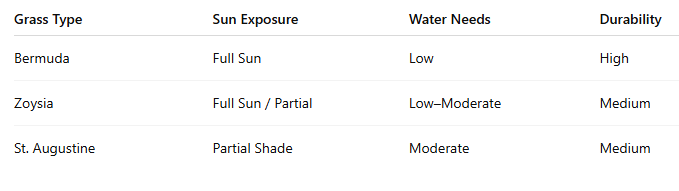
Understanding these differences helps ensure your lawn performs well year-round.
Even the best grass type can fail if it’s not installed correctly. Proper drought tolerant sod installation plays a crucial role in long-term success.
Working with professionals like Texas Sod Pros ensures your lawn is installed with precision and care, reducing the risk of future issues.
While these grasses require less water, they still need proper hydration, especially during establishment.
Even the best drought resistant grass benefits from a well-planned irrigation system.
Choosing a drought tolerant grass for Texas is only part of the equation. Avoiding these mistakes will help protect your investment:
Not all grass works for every yard. Sun exposure and soil type matter.
Improper sod installation can lead to weak roots and patchy growth.
Too much water can cause shallow root systems, making grass less drought-resistant.
Healthy soil supports better moisture retention and root development.
When installing a new lawn, homeowners often compare sod and seeding.
For most Texas properties, drought tolerant sod installation is the preferred option due to its reliability and faster performance.
Maintaining a drought-resistant lawn requires consistency, even if it needs less water overall.
These steps help your lawn remain healthy and green even during challenging conditions.
A successful lawn starts with proper planning and execution. From selecting the best drought tolerant grass to ensuring correct installation, professional expertise can save time and prevent costly mistakes.
Texas Sod Pros provides:
If you’re looking to upgrade your yard with a durable, low-maintenance solution, working with experienced installers ensures your lawn is built to handle Texas weather.
For homeowners seeking minimal maintenance, artificial turf is another option worth considering. While not natural grass, it eliminates watering needs entirely and performs well in extreme heat.
However, for those who prefer natural lawns, choosing the best grass for Texas heat and drought conditions remains the most practical and visually appealing solution.
Timing plays a major role in success. Installing sod during the right season allows roots to establish more effectively.
Avoid installing during peak heat unless proper irrigation is in place.
Choosing the right drought tolerant grass is one of the smartest decisions you can make for your Texas property. With the right grass type, proper installation, and consistent care, your lawn can stay green, durable, and water-efficient throughout the year.
Whether you’re replacing an existing lawn or starting fresh, focusing on drought tolerant lawn grass ensures long-term success. From Bermuda to Zoysia, selecting the right option tailored to your yard’s needs will help you avoid common problems and reduce maintenance over time.
For homeowners ready to invest in a better lawn, Texas Sod Pros offers professional solutions designed for Texas conditions. With expert installation and guidance, you can create a lawn that not only looks great but performs reliably, even in the toughest weather.
Bermuda and Zoysia are among the top choices due to their heat resistance and low water requirements.
Most lawns need about 1 to 1.5 inches of water per week, adjusted based on weather conditions.
Yes, sod establishes faster and is more resilient, making it a better option for Texas climates.
Yes, with proper care and watering, these grasses can maintain color even during hot weather.
Yes, but it should be applied carefully and at the right time to avoid stressing the lawn.
Most sod begins rooting within 2–3 weeks, depending on conditions and care.





.svg)
.svg)