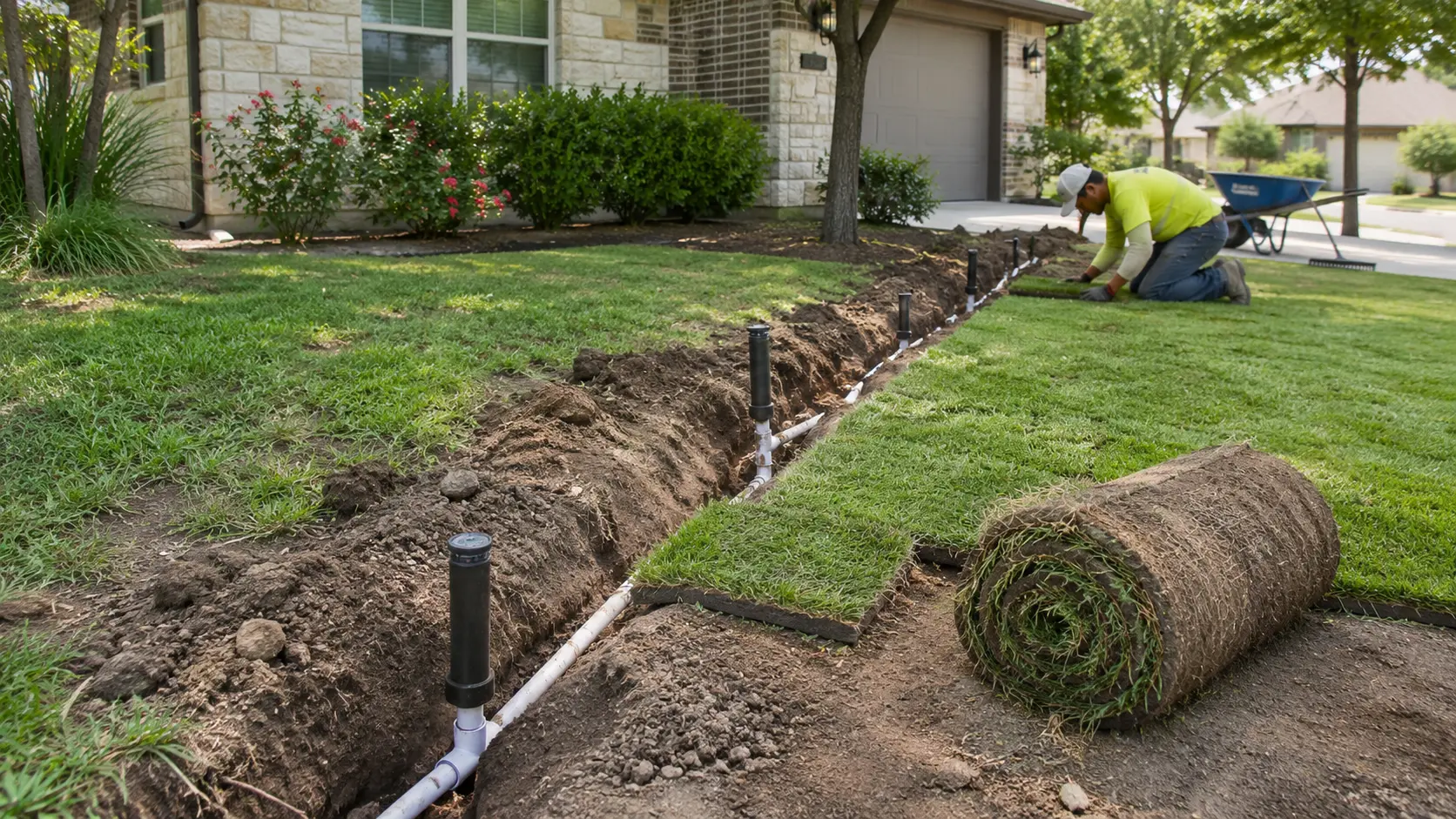
If you are planning a new lawn in Dallas-Fort Worth, you have probably asked whether the sprinklers or the sod should go in first. The short answer is that you should install the sprinkler system before sod whenever you can. The longer answer covers why that order saves money, what to do if the grass is already down, and how to keep the whole project on schedule.
This guide walks through both situations so you can make the call before anyone starts digging.
Irrigation is built under the lawn, so it makes sense to build it first. Here is what you gain.
Pipes sit several inches below the surface. When sod is already down, crews have to cut it open or push pipe through it, then repair the damage. With bare soil, they simply dig, lay pipe, and cover it.
Trenching and valve boxes disturb the soil. If that happens first, we can grade and smooth everything in one pass right before the sod goes down.
Sprinkler heads need to sit flush with the finished surface so they pop up clear of the grass and do not get hit by equipment. When the system is built first, the installer can set heads to match the final grade, including the thickness of the sod.
New sod needs moisture right after it is laid. When the system is tested and ready, you can start watering immediately instead of dragging hoses across a fresh lawn. Our guide on how to water new sod explains why those first days matter so much.
For a bare yard or a full rebuild, this is the sequence that works best.
Remove old grass and debris, then rough grade so water drains away from the house. For a struggling yard, our lawn replacement service covers the removal and prep.
Trenches are dug, pipe and valves go in, and heads are placed. A licensed irrigator should handle this, since Texas requires one for irrigation work. The backflow device and rain and freeze sensors are installed at this stage as well.
Before anything gets covered, the system is run to check for leaks, clogged heads, and weak spots. It is far easier to fix a problem when the soil is open.
With the pipe in place, the soil is smoothed, loosened where needed, and brought to the correct height. Heads are adjusted so the sod will end up level with them.
Fresh sod is laid tight with staggered seams and rolled for soil contact. Our sod installation crews cut neatly around heads and valve boxes.
Zones are adjusted and you get a watering plan for the first weeks. Our new sod watering and maintenance guide is a useful companion.
You can still add sprinklers after sod, and plenty of homeowners do. It just takes more careful work.
Installers can use a pipe pulling machine or narrow trenching to limit the damage. In some cases sod is cut in strips, set aside, and relaid over the pipe.
You may see lines or thin spots afterward. Patch repair fixes any trench that does not heal cleanly.
If the sod is brand new, wait until it has rooted before trenching. Our post on how to tell if your new sod is taking root shows what to look for before you schedule the work.
Waiting can be the practical choice when the lawn is healthy and only the watering system is missing, or when your budget calls for two separate projects. If your lawn is thin, patchy, or failing anyway, replacing it at the same time as the irrigation work often gives a better result for less hassle.
A few common errors cause most of the headaches.
Grass choice affects your design too. St. Augustine sod tends to need more water than Bermuda sod, and a good irrigator will plan zones accordingly. If you are unsure which grass suits your yard, start with that choice, then design the system around it.
If you are searching for sod installers near me who can work around a sprinkler project, Texas Sod Pros can help you plan the timing. We look at your yard, discuss the right order, and make sure the soil and sod are ready when the system is.
No more juggling separate crews on different days. Request a free estimate, see finished lawns on our our work page, or visit the Texas Sod Pros home page to learn more about our services.
Before, whenever possible. It avoids cutting through new turf, allows cleaner grading, and lets you water the sod the day it is laid.
Yes. It takes more careful trenching and usually some repair afterward, but it is a common project.
Wait until the sod has rooted firmly, which often takes a few weeks depending on the season. Cutting too early can disturb young roots.
Not if it is done carefully. Expect temporary marks along trench lines and plan for patching if any areas fail to recover.
Yes. Texas requires irrigation systems to be installed by a licensed irrigator, so ask for a license number before you hire anyone.
Right after it is laid. Our FAQ page and watering guides explain the schedule in more detail.
Yes. We plan sod installation around your irrigation project so the soil is prepared and the lawn goes in at the right moment. Contact us to discuss your yard.
Ready to plan your new lawn the right way? Contact Texas Sod Pros for a free estimate and honest advice on timing.





